


Espresso Series 1 Review: Fellow's Newest Coffee Endeavor

Let’s talk about espresso, the coffee world’s most temperamental brewing method.
Over the weekend, I took home the Fellow Espresso Series 1 to get some one-on-one experience with the San Francisco company’s debut espresso machine, which is designed to occupy the lonely middle ground between beginner-friendly automation and personalized customization.
Seamlessly blending approachability with high-end features seems to be a stock-in-trade for Fellow, who nearly two years ago released the Aiden Coffee Maker: an automatic brewer that offers everything from a completely guided experience to pour over-esque control over each brewing parameter.
In late 2025, Fellow finally set out to tackle the beast – distilling all the complexities of a $10,000 espresso machine into a minimalist, intuitive design that even newcomers can use to pull a rewarding first shot.
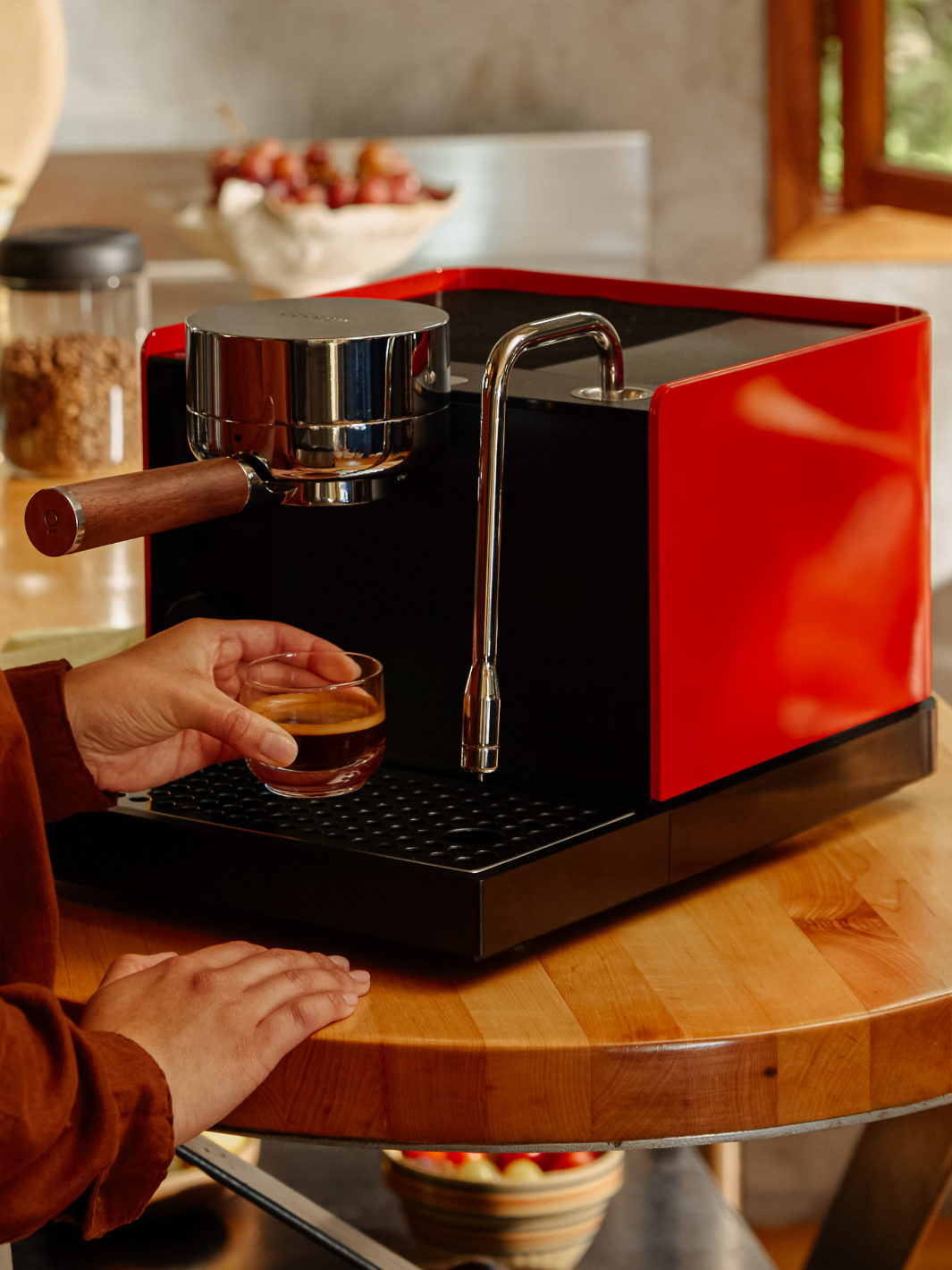
As a former barista, I am approaching the Series 1 having pulled thousands of espresso shots in my two-year stint behind the bar. I also had my own budget-friendly machine for home, small enough to fit onto my tiny coffee counter.
In my opinion, the Fellow Series 1 falls squarely between the professionalism of a commercial machine and the approachability of its home counterpart. It’s easy enough to get started on, yet quickly after tasting the first shot, I was reminded of early mornings in the café dialling in the espresso roast of the day.
I have to credit the Series 1’s impressive quality, including the hefty 58mm portafilter that weighs as much as any standard portafilter I’ve used in a professional café. In my experience with home espresso machines, the handle is plastic and much flimsier, an unwelcome reminder that you’re working with a cheaper iteration. The handle on the Series 1’s portafilter, conversely, is pure Maple or Walnut wood and satisfying to hold.
Speaking of its build, you can’t talk about any Fellow product without mentioning its eye-catching and modern design.
The Series 1 is unlike any other home espresso machine you’ll find today, many of which share the same industrial all-metal facade. It’s strikingly angular, minimalist, and like anything else from Fellow, well deserving of the spotlight. I particularly enjoy that it’s available in three colours, allowing you to choose between a more vibrant “statement piece” and a classic black exterior that fits elegantly in the background.
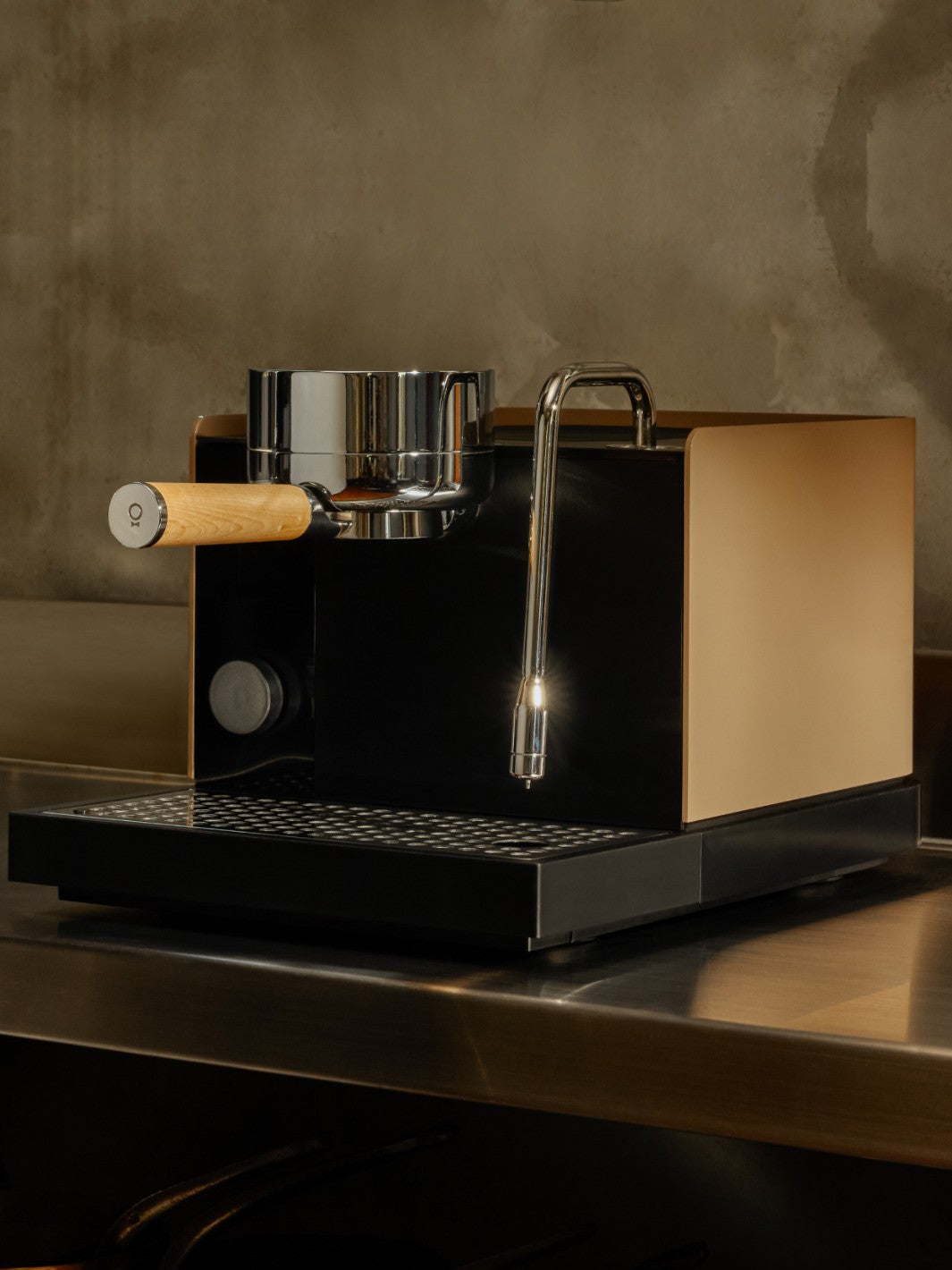
If there’s anything to consider about the design, it’s that the Series 1 takes up quite a bit of space, coming in at 31.5 cm wide and 28 cm tall. If you’re planning on keeping it below your cupboards, it’s just important to make sure that you’ll actually have room to remove and refill the water reservoir, which only lifts straight upwards. However, you can also fill it without removing the tank, so that's not a deal-breaker.
Even beyond its exterior, the Series 1 features some impressive technology, the most innovative of which is Fellow’s “Boosted Boiler” system. Employing two additional heating elements, it achieves the thermal stability of commercial dual-boiler machines, which can take anywhere from 15-30 minutes to reach temperature. Resoundingly, the Series 1 is ready to pull a shot in just two minutes. Plus, you can switch between steaming and brewing without the long wait.
Because the Boosted Boiler can heat up so quickly, it makes the Series 1 an excellent replacement for more than one appliance in your kitchen. The machine includes a separate spout, located just beneath the group head, that gives you quick access to hot water at controlled temperatures and volumes. Perfect for Americanos, steeping tea, or anything your kettle could do, but faster.
Making a Cappuccino on the Fellow Espresso Series 1
Pulling a shot
The Series 1’s “default profiles” was, for me, its most intriguing feature: pre-set recipes designed to help you pull a great shot without having to consider the small variables. Imagine bowling, but with the guard rails up. You're bound to get somewhere.
The main three profiles are self explanatory: Light Roast, Medium Roast, and Dark Roast. If you’re looking for a straightforward, delicious shot of espresso, you may never need to move past these presets.
If you would like to play around or experiment with something different, Fellow has programmed a selection of advanced profiles to mimic different types of espresso makers and their characteristic flavours. This includes Classic 9-Bar, for the bold intensity of a traditional shot, and Lever, which mimics the smooth flavour and subtle sweetness of spring lever machines.
To start out, I put the Series 1 up to the test with a box of DAK – Strawberry Kiss Espresso: a natural Ethiopian Landrace with tasting notes of strawberry gelato, star fruit, and apricot. As a light roast, it’s a formidable challenge for any espresso machine, the goal being to preserve those delicate fruity and floral notes which are easily overwhelmed with bitterness.
I used the Fellow Opus Gen 1 to grind, greatly underestimating how micro-fine the consistency would be on the lowest setting. My first shot was over-extracted, which turned into a great opportunity to test the machine’s beginner-friendly design features.

Had I been an espresso newcomer, I may not have understood why my first shot was small and bitter, much less what to do about it. Intuitively, the Series 1 gives you “Shot Feedback”, an optional feature that lets you know what went wrong and how to improve for next time. Shot pulled too fast? It’ll tell you how much finer to grind. Too slow? It’ll do the same, but coarser.
With a few small grind setting adjustments – the sweet spot fell between the 2 and 3 on the Fellow Opus – I was starting to get somewhere. My perfect time was around 30 seconds, which produced a juicy, well-balanced flavour profile brimming with vibrant strawberry notes, just like the box promised. The Series 1 had not only held up to my test; it passed with flying colours.
There was a flavour quality and complexity that genuinely impressed me which was, for the most part, easily achieved using one of their basic presets (Light Roast). Once again, I was brought back to my barista days, but instead of trudging through the complicated trial-and-error process to find the perfect dial, a lot of the work had been done for me.
Steaming milk
If I’ve learned one thing about espresso machines below $1,500, it’s that I should lower my expectations when it comes to the steam wand, which is almost always smaller, less flexible, and weaker. Another annoyance is that many budget models spit out a stream of water before the boiler heats up to steaming temperature.
To avoid watered-down milk in my cappuccino while using a home machine, I’ve habitually allowed the steam wand to run a few seconds before submerging it into the pitcher. I soon realized this was not necessary for the Series 1, which (thanks to the Boosted Boiler) unleashed a full-blown jet of steam almost immediately. I was genuinely – and literally – taken aback, as I’d only seen this kind of speed and power on many prosumer dual-boiler machines. However, I still found it easy to steam amazingly textured milk.
If you’re interested in some guidance, the Series 1’s “Handheld Steam Assist Mode” will tell the steam wand to stop automatically when it reaches a desired temperature, up to 150ºC. This helps to prevent accidentally over-steaming (a.k.a scorching) your milk, which will ruin a great espresso shot. I set my temperature to 140ºC, right around the sweet spot for a cappuccino.
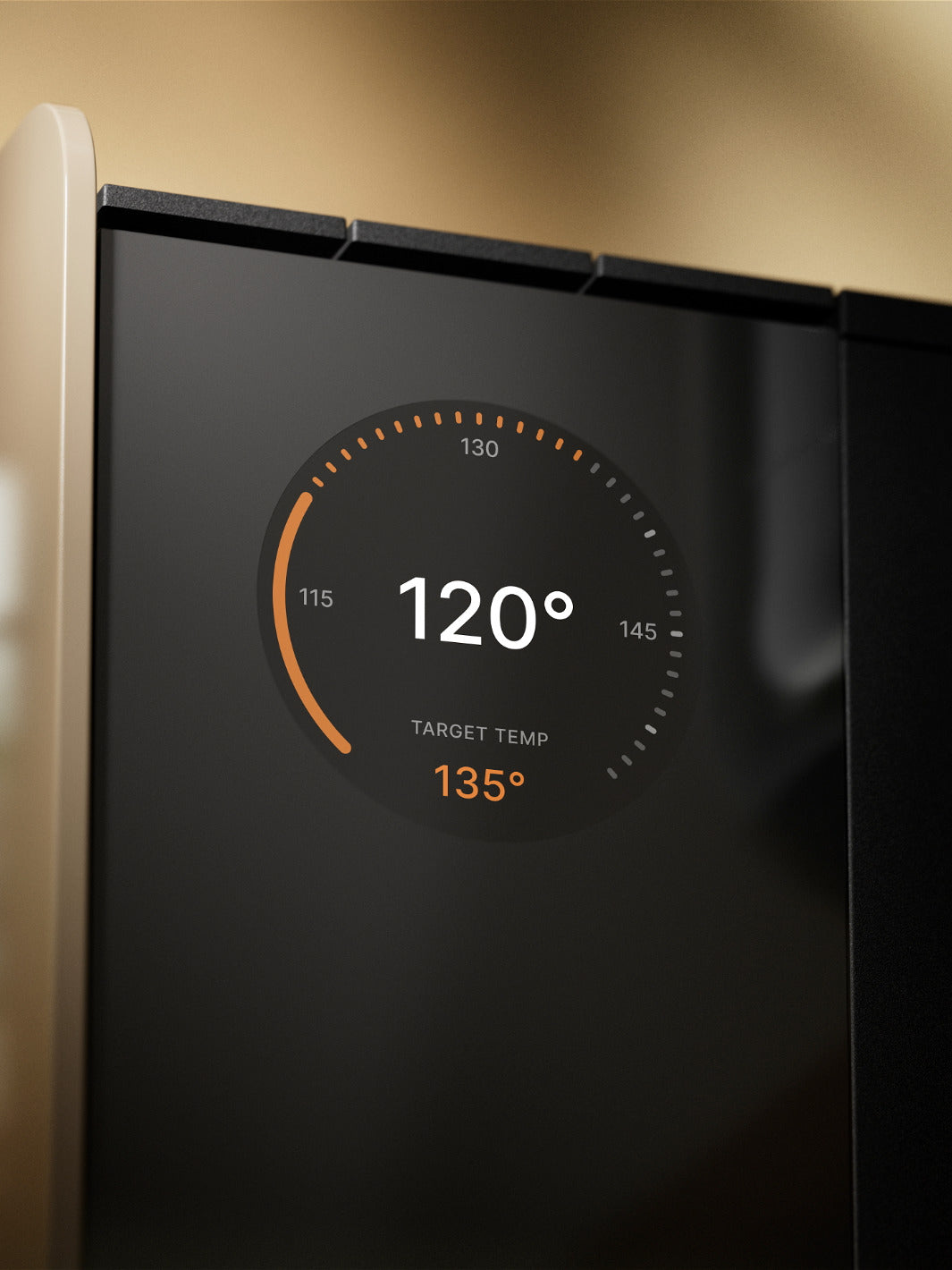
I also feel the need to mention that the steam wand is exceptionally designed; it’s positioned on top of the espresso machine, not underneath, and on a ball joint that allows you to maneuver and twist it in any way that’s comfortable. You can even position outside and completely to the right, plenty of room to create the perfect vortex without bumping into anything else.
The Series 1 has a clever feature that allows you to select from a list of popular milk alternatives including almond, oat, and soy, which internally adjusts the target temperature for each milk based on its protein and fat content.
For a bit of context as to why this might be helpful, non-dairy milk is infamously unforgiving. Add too much air? Fail to get a perfect vortex? You’re almost certain to end up with an amorphous blob as your latte art. This little feature helps to smooth out the learning curve.
My dairy alternative of choice is oat milk. With my budget home espresso machine and its compromised steam wand, I would be lucky to achieve anything more than a single white dot. From the second I started the pour after steaming with the Series 1, I could tell that the texture of my oat milk was perfect. And, despite some time having passed since I’ve made an oat cappuccino behind the bar, I was able to create a decent (albeit asymmetrical) double heart.

The Conclusion
The Series 1 is an excellent achievement, demystifying the world of specialty espresso that had (until recently) only been occupied by seasoned professionals and cafés. If your goal is simply to pull a delicious shot, the machine will help you achieve it so you don't have to go in blind. And if you have the confidence to get creative with variables like temperature and pressure profiling, you no longer need to invest $5,000 into a machine to get the necessary controls.
While impressive, there is some room for improvement. An area that needs some development is the availability of brew profiles through the app – a prominent feature of the Fellow Aiden Coffee Maker. But as the software continues to update, the Series 1 will, no doubt, catch up very soon.
Additionally, the Series 1 offers advanced features with a premium look and feel, though it does so through incorporating some plastic elements to keep the price more accessible. Those seeking to completely avoid plastic may want to consider the all stainless-steel alternatives.
In short, the Fellow Espresso Series 1 is a big win-win for everyone in the coffee community. Including the newcomers, who, if they’re using this machine, are certain to become connoisseurs in no time.
Previous article

Next article


