


An Easy Guide to Better Coffee Cupping with the supergood™ Cuppy

Skip to a section in this blog:
- Why do we cup coffee?
Jump to section - How supergood™ Cuppy helps to improve your coffee cupping workflow.
Jump to section - A step-by-step guide to cupping with supergood™ Cuppy.
Jump to section
Why do we cup coffee?
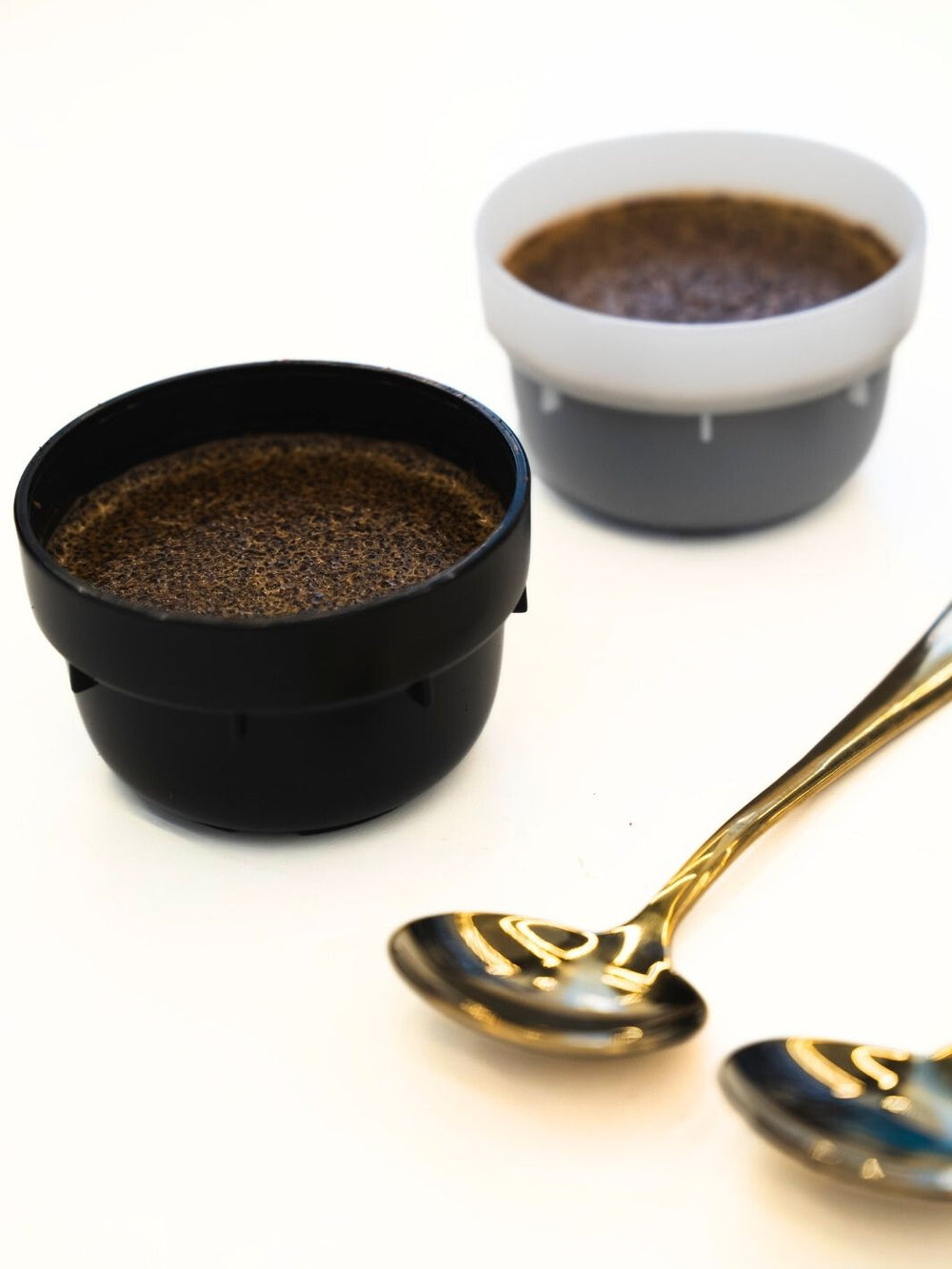
Cupping is a brewing technique that is used to grade the quality of a cup of coffee, or to compare the differences between multiple coffees.
The largest benefit of cupping is variety. In other words, it allows you to taste several samples of coffee in quick succession since each one is contained to its own cup. Coffee’s key attributes include flavour, acidity, body, and balance. How these are expressed depend on other factors such as terroir, processing method, roast profile, and grind setting. To get the clearest picture of a coffee’s true character (including the identification of tasting notes or possible defects) it’s common to have 6-12 samples cupped in one sitting.
Typically, cupping is used by green coffee buyers, roasters, quality control specialists, and café owners to determine the best-possible product to pass on to customers and to keep their palate trained.
It’s also one of the most straightforward brewing methods, consisting of pouring near-boiling water directly over a bed of very coarse coffee grounds. Like anything, there is some technique involved in time management and breaking the crust, but that can quickly be nailed down with practice. Therfore, cupping is an excellent practice for home brewers or roasters looking to advance their technique.
The best part? Coffee cupping does not require a huge investment. Let's talk about how you can perfect this brewing technique without breaking the bank.
The supergood Cuppy™ Cupping Bowl

One of the greatest challenges in coffee cupping is dealing with ceramic cups; they are costly and fragile, meaning that the likely chance of having one chip or crack during a cupping session is (to say the least) quite an inconvenience. Especially when the expense of replacing them starts to accumulate.
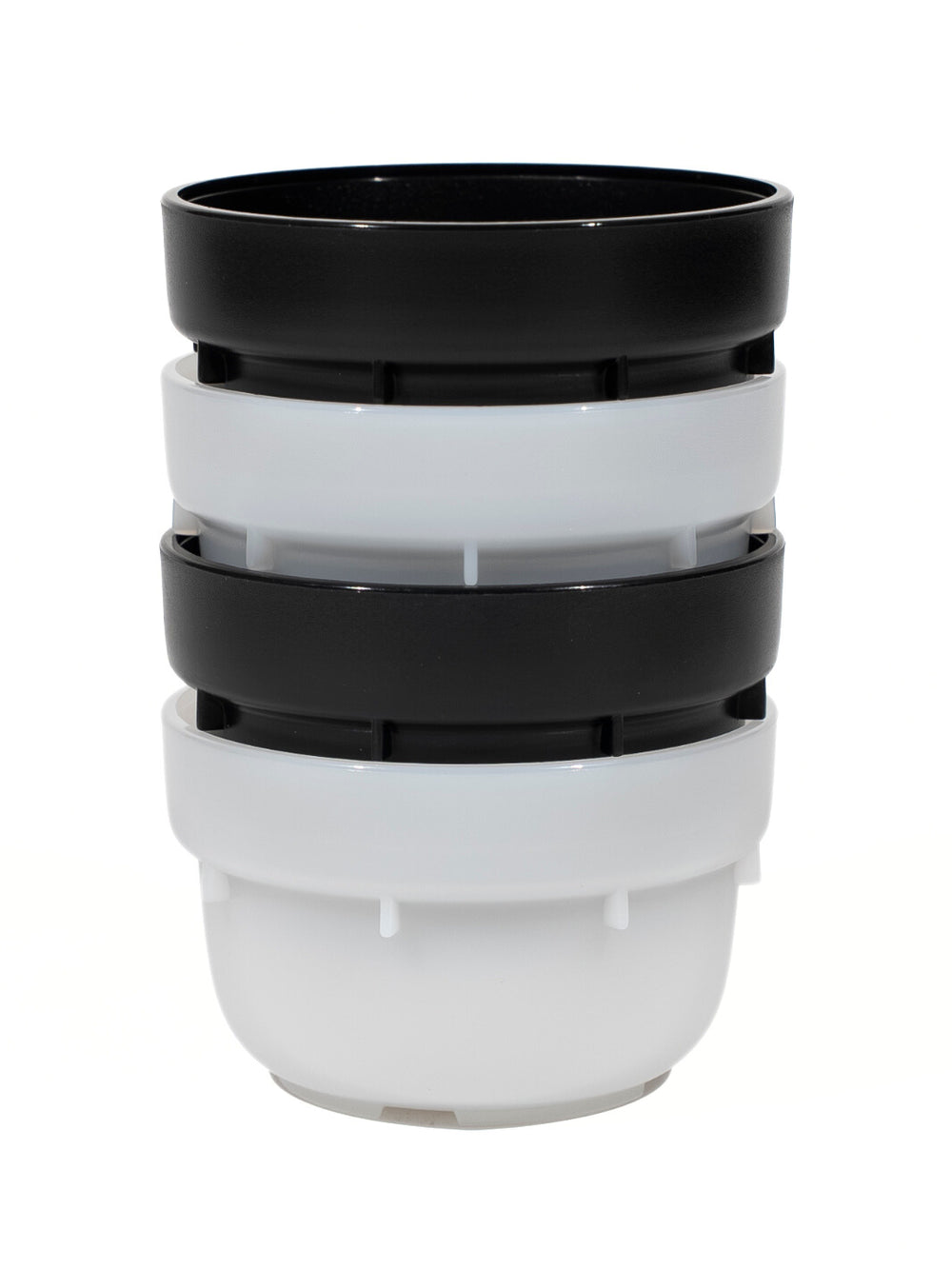
Made with polyethylene plastic and weighing 37.6g (1.32oz), supergood Cuppy™ Cupping Bowls are designed to make coffee cupping easier, more secure, and much more affordable.
Their lightweight build allows the Cuppy™ Bowls to be tossed into the dishwasher or stacked on top of one another without the risk of breaking or chipping. The crack-resistant material also means you can pour boiling-hot water directly into the Cuppy™ Bowl without taking time to warm it up – a real game changer when you’re brewing 12 cups of coffee at once.
Yet another time hurdle in cupping is waiting for coffee to cool down to an appropriate temperature for tasting. After all, it’s hard to detect subtle flavour notes and delicate aromatic compounds with a scalded tongue.
The initial brewing temperature for most coffee cupping is hot, around 93°C (200°F). However, it’s recommended to let it cool down by at least 30°C (50°F) before taking a slurp. Because the supergood Cuppy™ Bowl does not retain heat like a ceramic cup, that cool-down time arrives much quicker.
Again, when you are juggling multiple different coffees at once, every second (and cup) saved can make a huge difference.
Lastly, the supergood Cuppy™ Cupping Bowl comes in either Matte Black or Pearl White. If you find yourself cupping a range of dark, medium, and light roasts, it’s recommended to use a darker cupping bowl to avoid letting visual biases influence your tasting notes. The pitch-black material of the Cuppy™ is perfect for keeping your taste tests 100% blind.
A Step-by-Step Guide to Cupping With the supergood Cuppy™
What you'll need
- supergood Cuppy™ Cupping Bowls
- supergood Spoony™ Cupping Spoons
- Coffee grinder
- Coffee scale
- Timer or stopwatch
- Coarsely ground coffee beans (see your grinder’s manual for the appropriate setting)
- Brewing water heated to 93°C (200°F)
Coffee cupping ratio:
According to the Specialty Coffee Association of America (SCAA), the optimal coffee to water ratio for coffee cupping is 8.25 grams per 150 ml of water.
- Grind your coffee according to your grinder’s optimal setting for cupping (consistency should be slightly coarser than drip coffee, similar to the texture of coarse sea salt).
- Distribute the coffee grinds into individual Cuppy™ Cupping Bowls. To test consistency, divide the same coffee into two separate bowls to rule out any defects that may have snuck into one grind but not the other.
- Assess the dry “fragrance” of the coffee. Note down your thoughts.
- Start your timer and pour your brewing water into each cup.
- Smell the wet “aroma” once every cup has been filled. Do the wet aromas differ from the dry fragrances? Note down your thoughts.
- After four minutes, use the back of your Cuppy™ Cupping Spoon to gently “break the crust” that should have formed at the top of each bowl.
- This might take some practice; be careful that the spoon does not dip past the surface as this could stir up the coffee grounds at the bottom.
- Depending on your coffee and roasting style, some crusts may be thicker than others.
- Using two Cuppy™ Cupping Spoons, gently collect the foam that has formed on the surface. Discard in a separate cup.
- Again, this step takes practice.
- Pretend you’re making a venn diagram with the two spoons, crossing one slightly over the other. This helps guide the foam in between them.
- Allow the coffee to cool. Again, if you’re using the supergood Cuppy™ Cupping bowls, this should take less than the standard 10-15 minutes after the initial pour.
- The temperature should be between 70°C (160°F), according to the SCAA.
- It’s time to cup your coffee! Be sure to pay careful attention to subtle tasting notes, sweetness, acidity, body, and balance (how everything comes together to create the perfect cup).
- A common practice is to slurp your coffee. Like aerating a fine wine, this helps to develop flavours on the palate.
- Have you cupped this coffee before? Has anything changed? Don’t forget to record your thoughts!
- Note: if you find that tasting notes aren’t jumping out at you, you’re not alone. The SCA Taster’s Flavour Wheel is an excellent resource to help guide you in identifying common flavours (and off-flavours) in coffee!


